
Vacant Land × Parking Lot × Taxes
What owners really want to know: "How to use your land without losing money"
――A complete guide covering property tax, depreciable asset tax, and profitability――
Table of Contents
The Reality You Need to Know First: "Vacant Land Carries a Heavy Tax Burden"
As long as you own land, you will inevitably pay property tax every year. Vacant land (land without buildings) in particular is ineligible for residential land tax reduction measures and is taxed at the full rate. In the case of residential use, a special exemption can reduce the tax by up to 1/6, but this is not available for vacant land.
In urban areas,
Property tax 1.4%
City planning tax 0.3%
are levied together, making the burden substantial.
The biggest problem is that owning vacant land as-is means only taxes flow out every year without fail.
The Reality You Need to Know First: "Vacant Land Carries a Heavy Tax Burden"
The conclusion is simple.
✓ In most cases, converting to a parking lot will NOT lower your property tax
Whether gravel or asphalt, monthly or coin parking, the land continues to be treated as vacant land (miscellaneous land).
However, as an exception, the following cases may qualify for a reduction.
① Parking Lots Within the Grounds of an Apartment or Condominium
When intended for use by residents, it may be considered part of the residential land.
② When Used as an Integrated Part of the Same Lot as a Private Residence
Cases such as using part of a garden as a parking space.
※ Renting to outside parties will disqualify it from residential land treatment.
"Does Paving Raise Your Taxes?" A Correct Understanding of Depreciable Asset Tax
The property tax on the land itself barely changes, but installing equipment may result in additional taxation.
Key Points on Depreciable Asset Tax

Among parking lot-related equipment,
· Asphalt paving
· Fencing
· Outdoor lighting
· Payment machines
· Locking plates
· Mechanical parking systems
may be classified as "depreciable assets."
However, the important point is this.
✓ No tax is levied if the total acquisition cost is under 1.5 million yen (tax exemption threshold)
Even with asphalt paving, no tax applies if it stays under 1.5 million yen.
Even if it exceeds 1.5 million yen, the tax amount is generally not that large.
Furthermore…
✓ When the equipment is owned by the operating company in a coin parking arrangement
Since depreciable asset tax is paid by the equipment owner,
under a bulk lease arrangement, it is common for the contract to be structured so that no tax burden falls on the owner's side.
"Does Paving Raise Your Taxes?" A Correct Understanding of Depreciable Asset Tax
| Parking Lot Type | Property Tax (Land) | Depreciable Asset Tax |
|---|---|---|
| Gravel | No change | Generally not applicable |
| Asphalt | No change | Taxed if cost exceeds 1.5 million yen |
| Mechanical | No change | Almost certainly taxed |
※ Note: If the land use is changed from residential to parking lot, the residential land special exemption will be lost, so beware of tax increases.
How Much Is the Fixed Asset Tax? A Simulation for 100㎡
There are regional differences, but the general guidelines are as follows.
Urban areas: 200,000–300,000 yen / year
Regional cities: 80,000–150,000 yen / year
Even with paving, the depreciable asset tax is mostly only a few tens of thousands of yen.
Rather than just paying taxes on vacant land, converting it into a parking lot for revenue is overwhelmingly more advantageous.
Parking Lot Revenue Can More Than Cover the Taxes
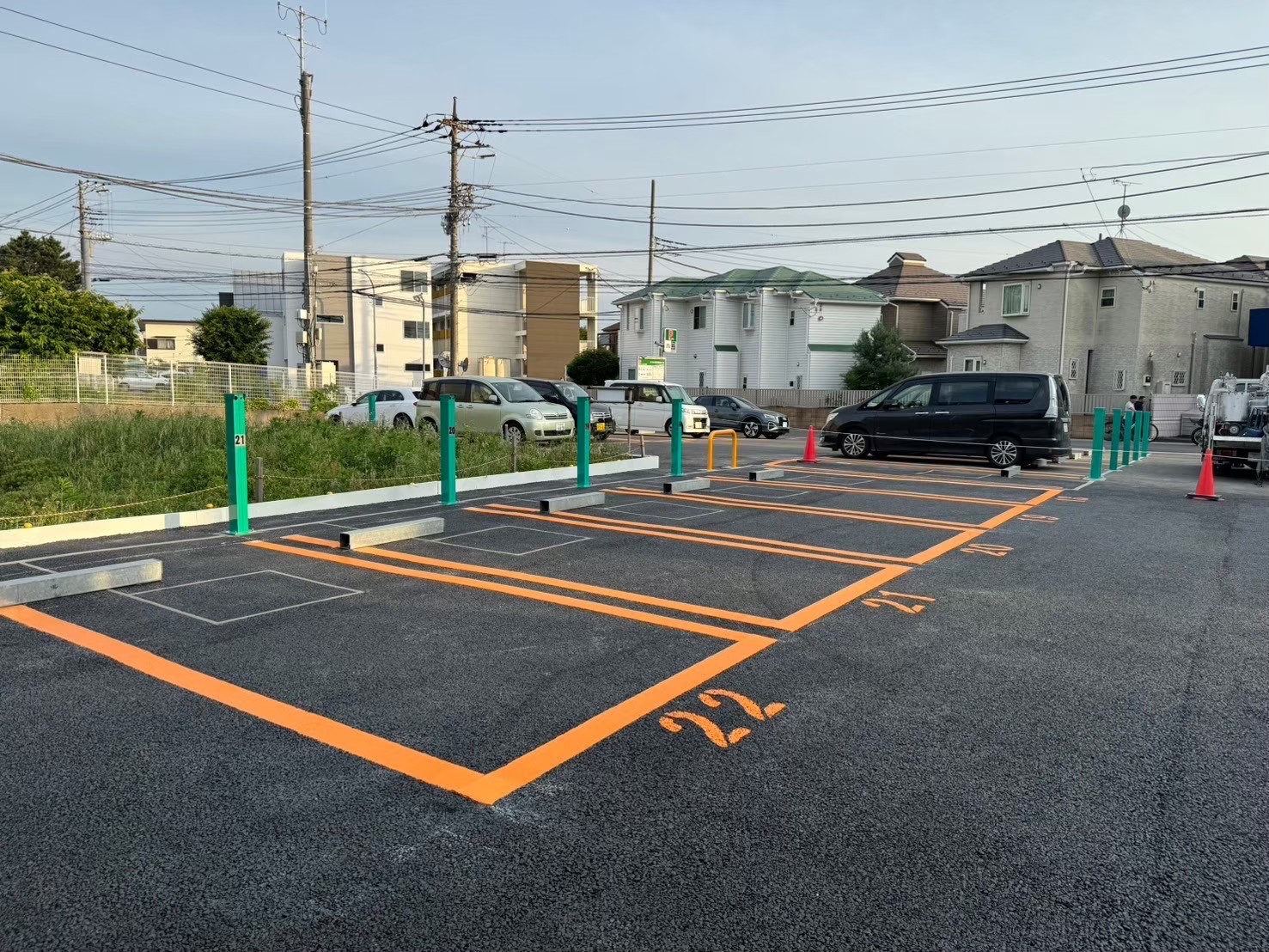
For example, a parking lot with 10 spaces × 10,000 yen each
generates 1,200,000 yen in annual income.
Even if the fixed asset tax is 200,000 yen,
approximately 1,000,000 yen in profit remains.
By shifting from "vacant land = an asset that only costs taxes"
to "parking lot = an asset that generates revenue exceeding taxes,"
the actual burden is greatly reduced.
However, the "Level of Burden Differs Greatly" Depending on the Operating Method
There are mainly three ways to operate a parking lot.
① Self-Management (Maximum Revenue · Maximum Effort)
Collection / cleaning / space management / complaint handling / unauthorized parking / equipment malfunction response
You must handle everything yourself.
This method is a heavy burden for anyone who does not live nearby or have ample free time.
② Standard Management Delegation (Reduced Effort · Variable Revenue)
A management company handles some tasks, but
trouble response / vacancy risk / fluctuating sales
remain with the owner.
Bulk Lease (Recommended by Our Company)
This is the method with the least burden and is also the most rational for tax purposes.
✓ Fixed monthly income (zero vacancy risk)
✓ Many cases require zero initial equipment investment
✓ Depreciable asset tax is borne by the operating company
✓ Cleaning, management, and trouble response are all handled for you
✓ Owner's workload is virtually zero
This is the ideal option for owners who want
"a guaranteed monthly income to cover fixed asset tax payments."
"Parking Lot × Bulk Lease" Is Far More Rational Than Leaving Land Vacant
The biggest disadvantage of maintaining vacant land is
that taxes keep going out while revenue remains zero.
Converting to a parking lot does not significantly reduce your taxes,
but generating revenue means the tax burden effectively ceases to be an issue.
Furthermore…
Equipment is easy to remove
It is easy to transition to future sale or construction
Initial investment can be kept low
Management burden is virtually zero
This is why it is the most popular "first step" in land utilization.
Summary
✔ Vacant land has no reduction measures and carries a heavy tax burden
✔ Converting to a parking lot basically does not change the fixed asset tax
✔ However, there is a possibility of reduction if used together with a residence
✔ Paving incurs depreciable asset tax, but it is tax-exempt if under 1,500,000 yen
✔ Revenue from the lot can more than cover the taxes
✔ With a bulk lease, enjoy stable income with "zero effort and zero vacancy risk"
For those struggling with maintaining vacant land,
parking lot × bulk lease is the lowest-risk and most efficient way to utilize your land.
If you know the size and location of your land,
we can quickly estimate "how much fixed monthly rent you could receive,"
so please feel free to contact us.